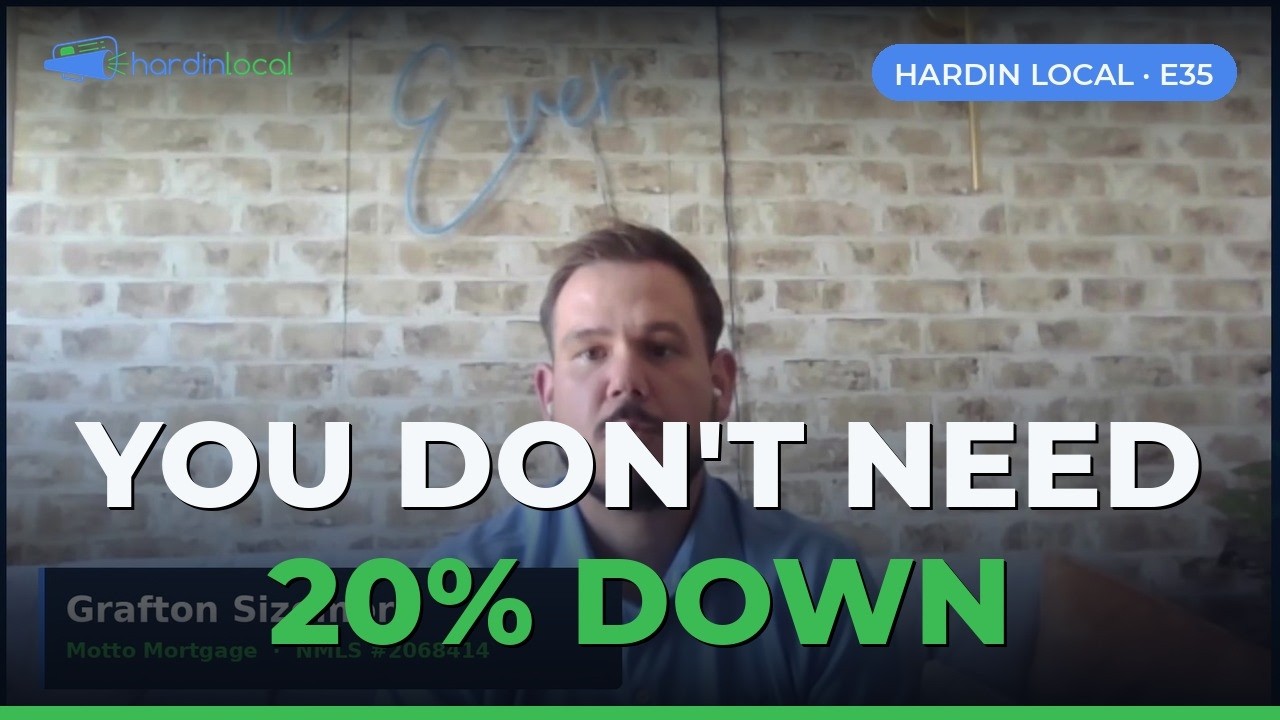
Money Moves with G: You Don't Need 20 Percent Down
The first Money Moves with G takes on the 20 percent down myth: what real minimums look like, what mortgage insurance actually protects, and why a ten-year renter is not locked out.

Key Takeaways
- Grafton's ballpark is that 75 to 80 percent of the loans his office writes have less than 20 percent down; FHA is 3.5 percent, and VA and rural housing programs can be zero down
- On a $300,000 home, 3.5 percent down is roughly $10,500, and sellers in this area commonly cover part or all of a buyer's closing costs
- Mortgage insurance protects the lender, not the house, and Grafton says it can run on the order of $35 to $60 a month against keeping $50,000 in your pocket
- When you shop lenders, ask for the base rate without points; a similar rate can hide thousands in fees at closing
- Rate movement: Grafton gives ranges only, never an exact number, because rate sheets change several times a day and every file is different
Summary
Grafton Sizemore's first Money Moves with G started with a disclaimer and a promise. He is a loan officer, not a planner or an adviser, the segment is education rather than advice, and he will not give an exact interest rate on air because the number would be wrong by the afternoon. Then he went after the belief that keeps more Hardin County renters on the sidelines than any other: that you need 20 percent down to buy a house.
It matters because Rachel Brantingham's housing update, minutes earlier, put the county's median sold price at $307,495. Twenty percent of that is more than $61,000. Three and a half percent is about $10,500, and for veterans and rural housing borrowers the down payment can be zero.
Full Article
Rachel set the segment up by drawing the line between her update and his. "I can tell you a lot about what a house costs," she said, "but I can't really tell you what it costs you. This is a completely different question, and it is the reason this next segment exists."
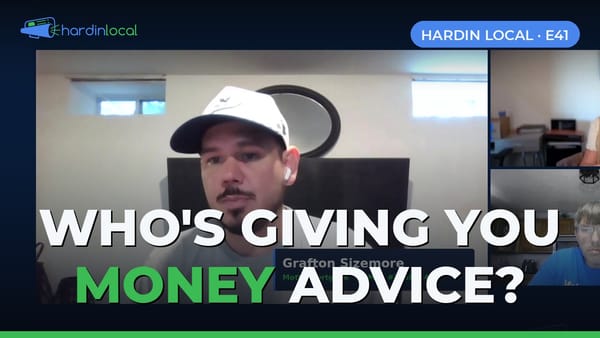
Grafton opened with what he called a quick housekeeping item, in his own words: "I'm a Team Loan Officer at Motto Mortgage Home Group here in Elizabethtown and NMLS number 2068414. I'm not a financial planner. I'm not an investment advisor, and I will give my opinions on those things, but I always tell you to go to a professionally licensed person for those things. This is just for education. It's not a rate quote and it's not an offer or even a pre-approval."
He then explained why he would not be reading a rate. "Even at our office, our rate sheet will change three and four times a day," he said. "The rates that I've got at 10 AM will be different at 4 PM." Every borrower's credit score, debts and loan type feed into the number, so what he can offer each week is a rough sense of where things sit, in ranges, and nothing more precise than that.
The week's topic was the down payment. "This week I want to debunk the idea that you have to have 20 percent down to buy a house," Grafton said. "It's just not the case. It hasn't been the case for a while now." His ballpark: 75 to 80 percent of the loans his office writes, maybe more, have less than 20 percent down. The most common route is an FHA loan at 3.5 percent down. It is geared toward first time buyers but not limited to them; you just cannot hold two at once. On the $300,000 home Rachel had described as typical, that is roughly $10,500. "It's manageable," he said. "It's not what it used to be, where people thought you had to bring $60,000 to get into a house." Veterans can buy with no down payment through a VA loan, and rural housing loans can also be zero down, with stricter debt to income limits.
Closing costs are the other number that scares people, and here Grafton was blunt about his own industry. Every lender presents them differently, and a rate that looks better can be bought with points the borrower does not notice. He described a recent case where a competitor's quote carried almost $14,000 in points to reach a rate similar to his. "If you shop around, ask for the base rate. What's my base rate without points, what's my base rate without having to pay extra closing costs." He also noted that sellers in this area commonly cover part or all of a buyer's closing costs, something Rachel writes into contracts routinely.
Then mortgage insurance, which he said people confuse with home insurance. "Home insurance protects your house from storms, hail damage, whatever it might be. What mortgage insurance does is it protects the bank when you don't put 20 percent down." He compares it to gap insurance on a car. In his experience the monthly cost can be on the order of $35 to $60, against the alternative of tying up $50,000 up front. "A lot of people don't realize they're in the position to buy," he said, "and they actually can be, because 20 just isn't true anymore."
Jon O'Brien asked the question a lot of long-term renters have: after ten years of renting, is the door closed? "Absolutely not," Grafton said. Rents have risen to the point that a mortgage payment can be close to a rent payment, with equity building instead of disappearing. He said he writes loans for buyers in their 60s and 70s, because a home is an asset that passes to the next generation whether or not the borrower sees the end of a 30 year term.
Rachel closed with the question she hears most: should buyers wait for rates to drop? Grafton's answer was about time rather than rates. If a $340,000 house is $370,000 next year, waiting on a half point drop can cost $30,000, because real estate has historically appreciated over time. Refinancing later is an option, and his office keeps a list of clients and their break-even points, but he warned that a refinance pitch is not the same as a refinance that pays. "Just because somebody's telling you you need to refinance doesn't mean the math works."
His one takeaway for the week was about the math itself. The question is almost never whether you can afford a house. It is that nobody ever showed you the actual numbers. Let somebody show you the math.
Grafton Sizemore is a Team Loan Officer at Motto Mortgage Home Group in Elizabethtown, NMLS #2068414. He is not a financial planner or investment adviser. Everything in this segment is education, not advice, and it is not a rate quote, an offer of credit, or a pre-approval. Each Office is Individually Owned, Operated, and Licensed.
Never miss what's happening in Hardin County. Create a free account and you'll get the weekly events email and every new article the moment it drops. No password, no spam, just your county.