Inside Hardin County EMS & Emergency Management — The People Who Answer the Call
Emergency Management Director Joey Scott and county communications officer Brian Walker open Hardin County's new monthly show — the 9th ambulance, winter readiness, the Quick Response Team, and how to get help.

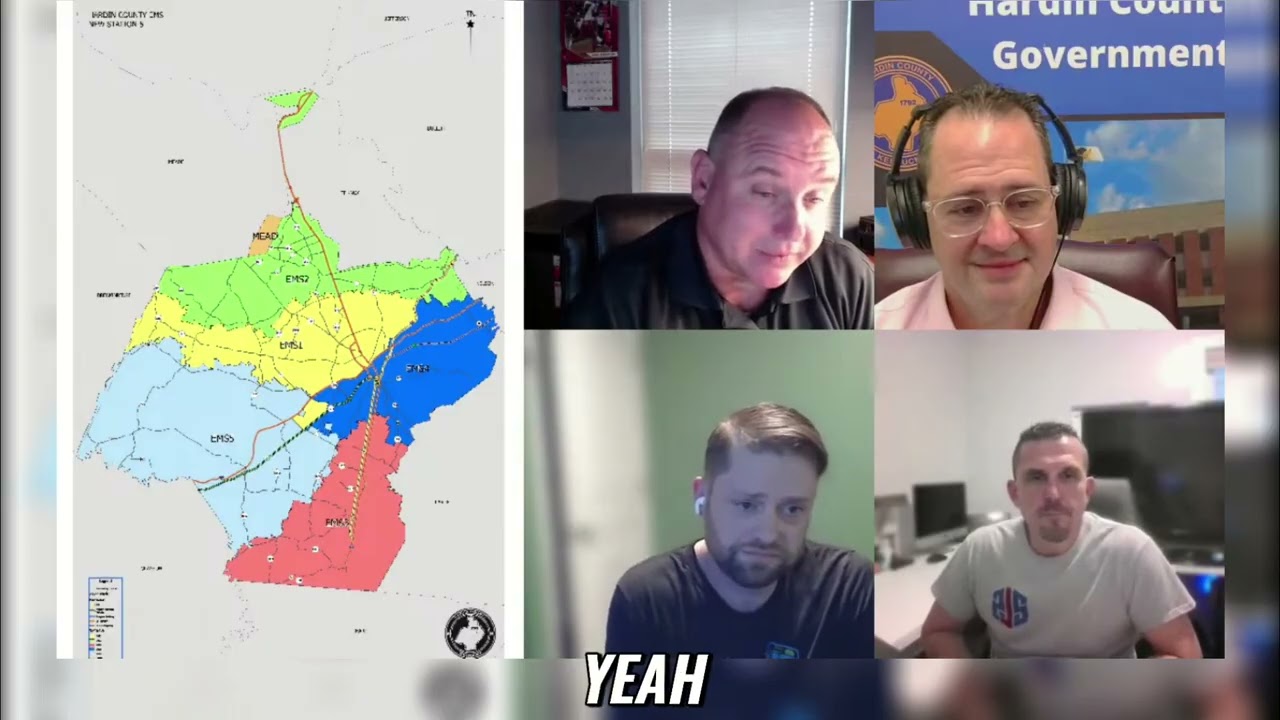
When something goes wrong in Hardin County — a wreck, a fire, a flooded road, a medical emergency — a lot of people move into action long before most of us ever hear about it. This is the very first episode of Hardin Local with Hardin County Government, a new monthly series where host Phil Taul and co-host Scott Lucas sit down with the people who keep the county safe, moving, and informed. Joining them are county communications officer Brian Walker and Joey Scott, Hardin County's Emergency Management Director, for a wide-ranging conversation about EMS, emergency readiness, and how residents can get involved.
Why a monthly county-government show
Brian Walker framed the idea behind the series as transparency — a chance to put a face to the offices most of us only think about when something bad happens. As he put it, county government is a big, moving, breathing thing, with more than 300 employees and many more affiliated people in agencies like the fire departments. Each month the show will feature a different department; next up is the county road department.
"A chance to speak to the people who shape your life every single day, even if you don't realize it, is pretty important." — Brian Walker, County Communications Officer
Hardin County's 9th full-time ambulance
The headline news: Hardin County added its ninth full-time ambulance crew, based in White Mills, to close a long-standing gap in the western part of the county. Joey Scott explained that response times out west had been running 30 to 50 minutes in some cases — and that was just to reach the emergency, before any treatment or transport.
The crew came together over at least six months of work with the West Hardin fire department, plus county leadership and residents who turned out for a local town hall forum. The White Mills Fire Department invested $25,000 in living quarters and infrastructure to support a full-time ambulance, and the build-out was done by a detention-center work crew, which saved money. The EMS team crunched the response-time and run-volume data that guided the decision.
- A backup ("backfill") truck arrangement now lets the western and southern stations cover for each other when one is out on a transport.
- Mutual-aid agreements mean Hardin County crews respond across county lines when they're closest — into LaRue County roughly 190 times so far this calendar year, plus Bullitt and Hart counties.
- To staff the new site, the county is looking to bring on roughly 9 to 12 people, at an estimated $300,000+ in additional payroll through the end of the fiscal year in June.
Joey Scott offered some perspective on how far the county has come: before October 1980, ambulance service here was a patchwork of funeral homes, volunteer fire departments, a private service, and an arrangement between Hardin and LaRue counties. That was only about 45 years ago.
Getting ready for winter weather
With winter around the corner, Joey Scott urged residents to "button up" the house — check insulation, seal windows — and to learn how to use a generator safely, since carbon monoxide is a recurring danger during major winter storms. His biggest theme: have two ways to get emergency notifications.
- RAVE alerts — the county's emergency notification system. Sign up by scanning the QR code on the county website. Alerts can include weather, missing persons, and shelter-in-place instructions.
- Weather radios — inexpensive (around $25–$30) and available at most hardware stores and grocery stores. Hand-crank models keep working in long power outages.
- Outdoor weather sirens are not meant to be heard inside your home — don't rely on them indoors.
On calling for help, Joey Scott reminded viewers that 911 is for true emergencies. During the March windstorm, dispatch took a thousand calls in a single hour. He noted Hardin County is fortunate to have an enhanced 911 system that pinpoints a caller's location.
When the emergency is a quiet one
The conversation turned to crises that never make the news — depression, addiction, and abuse. Joey Scott pointed to 988, the Suicide & Crisis Lifeline, and described how first responders now build in debriefings and support groups, something that wasn't talked about when he started 30 years ago.
Hardin County's Quick Response Team, which will be about a year old come January, follows up after an overdose or crisis. The team isn't law enforcement and has no arrest powers — its role is to connect people with help, distribute Narcan, and teach classes. Brian Walker stressed that Narcan is a tool worth keeping on hand even for those far from drug use, because a bystander, officer, or family member might be the one who saves a life.
"Sometimes people need help. They don't need to be arrested. Sometimes people need an opportunity." — Brian Walker
A career that saves lives
Hardin County EMS crews work 24 hours on, 48 hours off, building what Joey Scott called a second family. The county is hiring — for EMS, for 911 dispatch, and for other roles. He highlighted that EMS positions here come with hazardous-duty retirement, which he said is uncommon for EMS in the region.
The first step toward an EMS job is a basic EMT course, offered locally and at ECTC. Brian Walker noted that the Work Ready scholarship program can let some students complete that training at no cost. Many local firefighters also work part-time for Hardin County EMS, and vice versa.
Education and community outreach
Beyond responding to calls, EMS and Emergency Management work in the community — teddy-bear clinics, school visits, CPR classes, and pushing RAVE sign-ups through the schools. Joey Scott encouraged everyone to get trained on CPR and on the AEDs now common in stores, restaurants, and gyms, because those skills save lives in the minutes before responders arrive. The county also uses the PulsePoint app, which can alert trained users to a nearby cardiac emergency and flags traffic incidents on roads like I-65.
The episode also looked back at a historic flood earlier in the year — roads in the southern part of the county were impassable for about three weeks, and crews performed over 50 swift-water rescues and evacuations. The repeated message: turn around, don't drown.
Resources mentioned
- Emergencies: always call 911
- 988 — Suicide & Crisis Lifeline (call or text, 24/7)
- EMS education department: 270-769-3014 (main administrative office; ask to be directed to education for CPR classes, training, and demos)
- Jobs & RAVE alert sign-up: HardinCountyKY.gov
Hardin Local with Hardin County Government is a monthly conversation putting a face to the county offices that serve Hardin County. Watch the full episode above, and find more at HardinLocal.com.