Inside Hardin County Animal Care & Control — A Landmark Cruelty Case and What Your Shelter Can Actually Do
Director Mike McNutt takes us inside Hardin County Animal Care & Control — a landmark Kentucky cruelty case, why officers can't just take a dog left in the cold, and how to adopt.

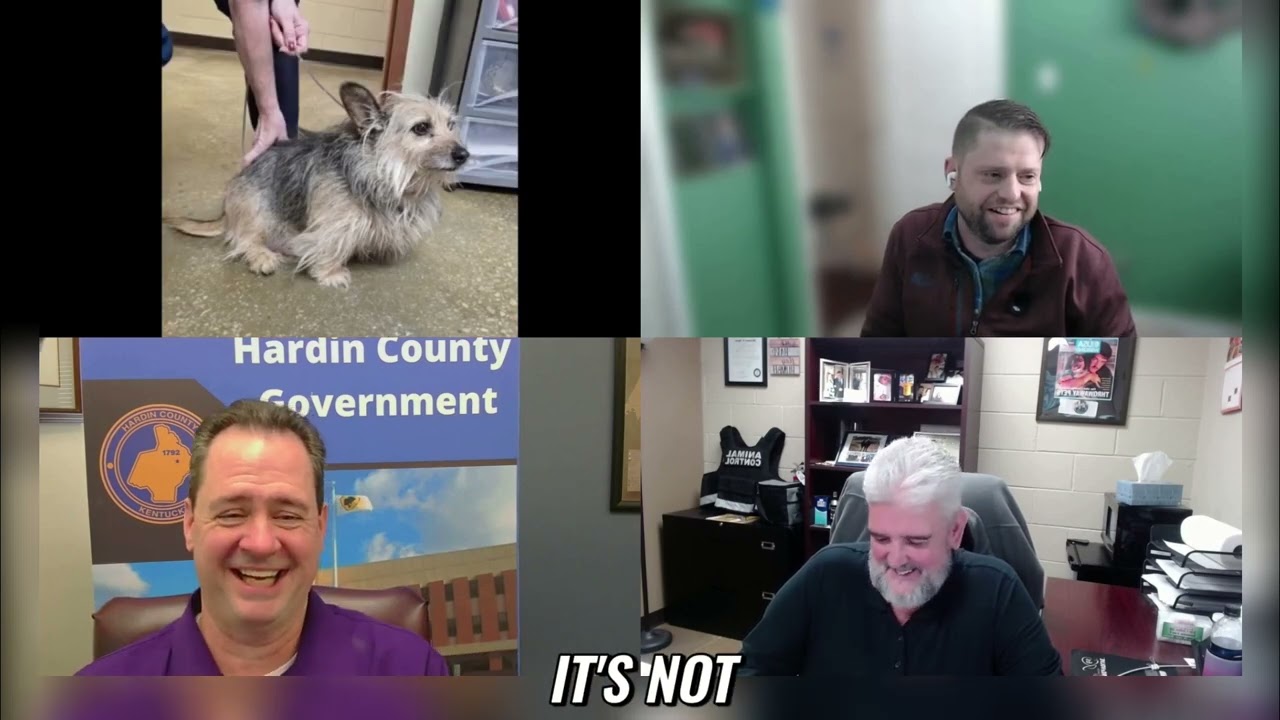
Most of us think we know what the animal shelter does — dogs, cats, adoptions. But there's a lot more to it, including some Kentucky laws that surprise just about everyone. This month on Hardin Local with Hardin County Government, host Phil Taul and county communications officer Brian Walker sat down with Mike McNutt, Director of Hardin County Animal Care & Control, who has run the department since 2016 and worked in the animal field for more than 35 years.
A landmark cruelty case
Mike's department was named a recipient of the 2025 Humane Law Enforcement Award from Humane World for Animals (formerly the Humane Society of the United States), shared with the Radcliff Police Department and the state prosecutor's office. The award stems from a landmark Kentucky animal-cruelty case — one of the first of its kind successfully prosecuted in the state — that ended in a guilty verdict on 22 counts of animal torture resulting in death and 10 counts of torture resulting in serious injury.
What made the case so costly was a quirk of Kentucky law. Because animals are legally treated as property, the seized dogs were classified as evidence — so the shelter had to maintain chain of custody and hold them for the duration of the case. The dogs were seized on May 5, 2023, and held for roughly two and a half years, tying up 14 of the shelter's large-dog kennels and costing the county well over $300,000 (board care runs about $25 a day per animal). The owner ultimately surrendered the dogs, which let the shelter spay, neuter, microchip, and adopt them out. Of the 14, six have already found their forever homes.
"A lot of people believe we can go out, and if we don't like the way the dog is living, that we can take the dog. And that's not true." — Mike McNutt, Director
What the law actually allows
That property classification shapes day-to-day enforcement, too. The shelter is legally required to hold strays for five days — and beyond that, Mike says, there's far less they can do than people assume. To remove an animal from someone's property, officers need a search-and-seizure warrant, which means meeting a burden of proof before a judge.
It's a question Mike gets constantly: a neighbor's dog is outside in the cold — can't you just take it? Usually, no. If the dog has adequate shelter, the law doesn't support removing it, even when officers wish it did. Mike, who also serves as president of the Kentucky Animal Care and Control Association, was direct: Kentucky needs better animal-protection laws, and the most effective thing residents can do is contact their legislators in Frankfort.
More than dogs and cats
The shelter itself only takes in dogs and cats, but officers handle far more in the field — including livestock calls like cows, horses, emus, and ostriches loose in the roadway. Wildlife is a different matter: raccoons, animals in trees, and similar calls go to Kentucky Fish and Wildlife, and the shelter works regularly with Nolin River Wildlife Rehabilitation. The shelter will also loan out a humane trap (no charge, just a rental agreement) to help with nuisance animals.
The TNR program is working
One of the department's clearest success stories is its TNR (Trap-Neuter-Return) program for community cats. The logic is simple: a neutered male cat stops welcoming newcomers into his territory and instead defends his food source, slowing the cycle of new litters. The numbers tell the story. In 2016, before the program, the shelter took in 2,192 cats. In 2025, after years of TNR, that number was down to 949 — well under half.
- TNR is for stray and community cats, not owned pets
- The surgeries are paid for by FOHCAS (Friends of Hardin County Animal Shelter) — free to residents who make an appointment
- For owned cats needing spay/neuter, residents should contact FOHCAS directly
Adopting from the shelter
Mike's biggest piece of advice for would-be adopters: come in, spend time with the animal, and research the breed before you commit. Every adoption goes home with the pet already spayed or neutered, up to date on shots, and (for dogs) microchipped, plus an adoption bag with local trainer and vet info.
- Adoption fees: $25–$200 (differential pricing — higher-demand animals offset the cost of harder-to-place ones)
- Includes spay/neuter, vaccinations, and microchip — veterinary care you couldn't get done elsewhere for the fee
- Around 50 animals are typically available; browse them at HardinCountyKY.gov/505/Adoptable-Pets
The shelter is run by just 14 total employees — including Mike and three animal control officers (three of whom are nationally certified) — and aims to be a no-kill facility, defined as a 90% or higher live-release rate. Last month the shelter hit 93%, and it has won the no-kill award nationally twice. A strong volunteer program rounds out the team; volunteers must be 14 or older and can walk dogs, clean cages, or help in the surgery wing.
Meet BC, the boss
The shelter has one permanent resident: BC, a cat seized in 2014 from a welfare-check case. After the case was won, the staff fell in love with him and kept him on as the shelter's official mascot. Now about 16 years old, BC has his own chair in Mike's office and a habit of lying down right in the middle of your keyboard. Everyone there just calls him the boss.
How to get involved
- Shelter phone: (270) 769-3428
- After-hours emergency: (270) 737-4217 (via 911 dispatch)
- Lost a pet? Text "Lost" to 270-951-0951 — and visit the shelter in person to look with your own eyes
- Hours: Monday–Saturday, Noon–4 PM
- Adoptable pets: HardinCountyKY.gov/505/Adoptable-Pets
- FOHCAS (Friends of Hardin County Animal Shelter): fohcas.org
If you spot a stray, Mike asks that you call the shelter rather than approach the animal yourself — put your safety first.
Hardin Local with Hardin County Government is a monthly conversation putting a face to the county offices that serve Hardin County. Watch the full episode above, and find more at HardinLocal.com.