What a Down Payment Actually Has to Be | Money Moves with G
Five percent on a $300,000 home is $15,000 — and putting an extra $30,000 down moves your payment far less than you would think. Grafton Sizemore explains why.


Key Takeaways
- On a $300,000 home, 5 percent down is $15,000 — and there are options below that, including loans with no down payment at all
- An extra $10,000 down changes a monthly payment by roughly $70
- An extra $30,000 down changes it by about $200 to $210, not the $500 most people expect
- The reason is escrow: insurance, county and property taxes and mortgage insurance make up a large share of the payment and do not shrink when you put more cash down
- No mortgage rate was given this week — Grafton said the market has been too volatile for him to quote one on air
Summary
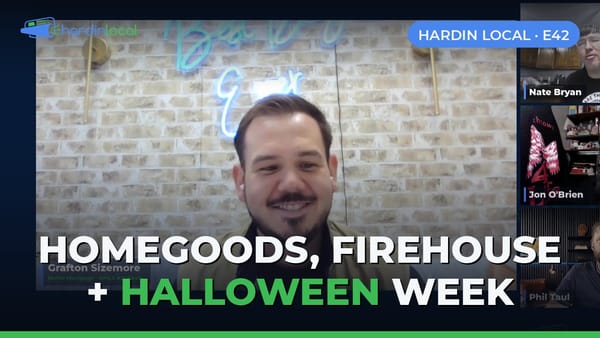
Grafton Sizemore has spent his first weeks on Hardin Local Weekly dismantling the idea that you need 20 percent down to buy a house. This week he got specific about what you actually need, and then went one step further into territory most people never think about: what happens when you put more down than the minimum.
The answer is less than almost anyone expects, and the reason why is worth understanding before you hand over an extra thirty thousand dollars.
Grafton's disclaimer, in his own words: "I'm not a licensed financial advisor and not a CPA. Anything on here is just opinions. So always seek out professional advice."
Full Article
Start with the number people think they need.
Twenty percent has lodged itself in the American imagination as the price of admission to homeownership. Grafton Sizemore has been chipping at that since he joined the show, and this week he laid out the alternatives in plain terms. There are loans at 3.5 percent down. There are rural housing loans with no down payment at all. And there is the conventional path at 5 percent of the purchase price.
On a $300,000 home — which sits close to where Hardin County's average purchase price actually lives — 5 percent is $15,000.
That is the entry point. What Grafton spent the rest of the segment on is what happens next, because this is where he sees buyers make decisions on bad assumptions.
"A lot of people are like, okay, well, I just want to go ahead and put some more money down than just the $15,000," he said. "And they get shocked to find what that difference actually makes in their monthly payment."
Here is the shock. Putting an extra $10,000 down moves a monthly payment by around $70. Putting an extra $30,000 down — triple that — moves it by roughly $200 to $210 a month.
"So a lot of people get surprised," Grafton said. "Well, I thought it would change my payment by $500 a month."
The explanation is structural, and once you hear it, it is obvious. A mortgage payment is not just principal and interest. A large share of it is escrow: homeowner's insurance, county taxes, property taxes, and mortgage insurance if the loan carries it. Those costs are tied to the house, not to how much of it you have already paid for. Bringing another thirty thousand dollars to closing does nothing to them.
Which turns the decision into a genuine tradeoff rather than an obvious win. Grafton framed it as a question: "Do you want that $200 cheaper a month, or would you rather have that 30 grand?" Kept in savings, that money earns interest and stays available. Put into the house, it buys a somewhat smaller payment and more equity, and it is no longer liquid.
There is no universal right answer, and Grafton did not pretend there was. What he offered was the actual size of the tradeoff, which is the part most buyers are missing when they make the call.
On rates: Grafton gave no rate this week. He said plainly that the market has been too volatile for him to put a number on air, and Hardin Local does not state, average, estimate or carry forward a rate he did not give. If you want current numbers for your own situation, that is a conversation with him directly.
Never miss what's happening in Hardin County. Create a free account and you'll get the weekly events email and every new article the moment it drops. No password, no spam, just your county.